
root@ransomvault:~$ tail -f threat_intel.log

Ransomware

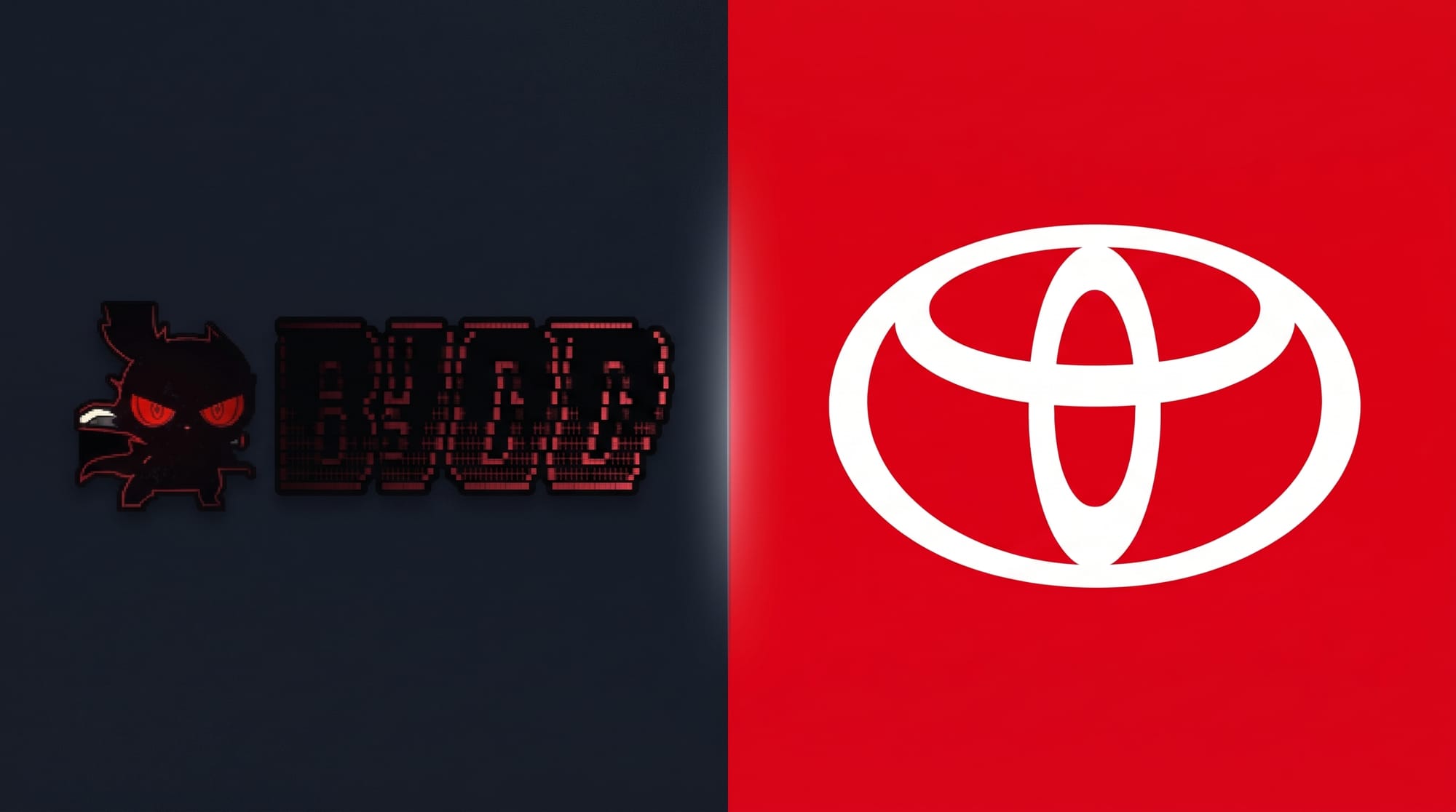
BYOD Ransomware Group Claims Breach of Toyota
Darkintel Team1 min read

The BYOD ransomware group has added Toyota to its data leak site. The post is marked “PSA” and was last updated on November 10, 2026.


According to the listing, the stolen data includes:

  • Full names
  • Email addresses
  • Physical addresses
  • Phone numbers
  • Dates of birth
  • Kiosk device data

In an unusual remark, the group says that “a lot was actually isolated.” This suggests Toyota’s defenses contained much of the intrusion, but the attackers claim they found “a few cracks” to get through. The post also points Toyota to the group’s contact page, a common way to pressure a victim into ransom negotiations.


We have not independently verified the authenticity or volume of the data, and no samples have been published so far. We found no public statement from Toyota about this claim at the time of writing. Ransomware groups sometimes exaggerate or make up claims, so this should be treated as unconfirmed.


This would not be Toyota’s first serious cyber incident. In December 2023, Toyota Financial Services warned customers of a data breach after a Medusa ransomware attack on its European and African divisions. In May 2023, it disclosed that a cloud database misconfiguration had exposed the car-location information of 2,150,000 customers over ten years. Toyota later confirmed an incident in which a hacker published a 240 GB archive of stolen data on a hacker forum. Toyota said that leak came from a third-party provider, not its own systems.

Potential risks
If the claim is genuine, the personal data listed could be used for targeted phishing, identity fraud, and social engineering against Toyota customers. Compromised kiosk devices could also point to weaknesses in dealership or customer-facing infrastructure.

Recommendations

  • Toyota customers should watch out for unsolicited emails, texts, or calls claiming to be from Toyota or its dealerships.
  • Do not share personal or payment details in response to unexpected requests.

We will update this post as more information becomes available.

Newsletter

Get the latest cyber news in your inbox

Ransomware, breaches and exploited vulnerabilities, delivered by RansomVault.

Free. No spam. Unsubscribe in one click.

Latest news

How PHP2Shell Works, and Why It Gives Attackers Access Before Your Code Even Runs

Knowledge

PHP2Shell, the pair of critical PHP vulnerabilities tracked as CVE-2026-109618 and CVE-2026-109619, has become one of the most heavily exploited bugs of the year. It was exploited four days before PHP released patches on October 21, added to CISA’s Known Exploited Vulnerabilities catalog, and most recently used to break into Check Point Security Gateways and wipe VMware ESXi hosts. But how does it actually work? This post explains the vulnerability in plain terms, using technical research on th

FAA Grounds All U.S. Flights Over Nationwide Air Traffic Control Communications Failure

Threat Intelligence

On Friday afternoon, the Federal Aviation Administration (FAA) ordered a nationwide ground stop at every U.S. airport, citing "extraordinary circumstances" and safety concerns. U.S. Transportation Secretary Sean Duffy said a communications problem was affecting all Air Route Traffic Control Centers across the country. "FAA technicians are investigating the issue. We will provide immediate updates as we have them," Duffy wrote on X. Departing flights must stay on the ground until further noti

PHP2Shell Attacks on Check Point Gateways Deploy Data Wiper on VMware ESXi Hosts

Zero-Day / Threat Intelligence

Threat actors are exploiting vulnerable Check Point Security Gateways in a campaign that ends with data-wiping malware on VMware ESXi hosts. According to Check Point Research, the attacks began on October 30, 2026, first against Israeli organizations. A single actor ran the whole operation, from initial access to lateral movement and destruction. Background: PHP2Shell PHP2Shell is the name for two critical PHP vulnerabilities, CVE-2026-109618 and CVE-2026-109619, that allow unauthenticated remo